
Production of biofuel is an upcoming and crucial field in environmental biotechnology. This is due to the rising energy crisis and an increase in the cost of commercially available fossil fuel across the world. This has attracted many researchers to take a series of steps to find a resolution and develop an economically feasible source to produce as an alternative fuel. Many local communities that own small scale industries are not aware of how potentially the coconut shell is used as a biofuel.
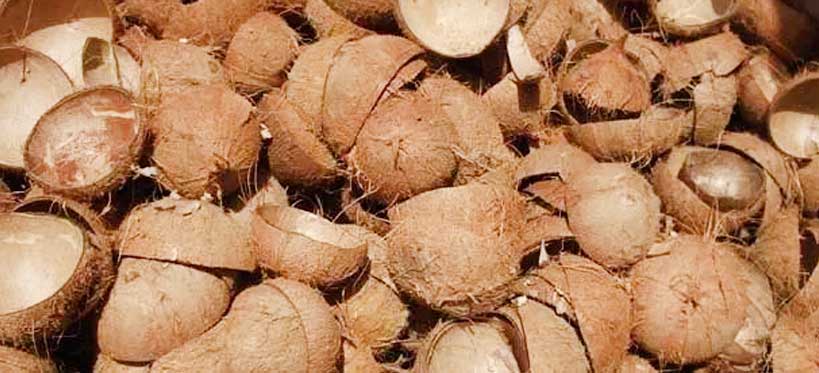
As the cost of petroleum price increases, simultaneously with the rise in demand of the same with depleting energy sources and supply, there arises an urge to go for the eco-friendly and sustainable process for biofuel production. Farmers are using coconut shells as organic fertilizers as it can conserve the moisture in the farmland, and also it helps in the reduction in nutrient loss during farming.
Over time, the coconut shell is modified into compost by which it exhibits the property of fertilizer. So, if the coconut shell is being taken up as a source to produce biofuel, with low cost, it reduces the pollution due to carbon dioxide emission, and its by-product can be used as fertilizer.